
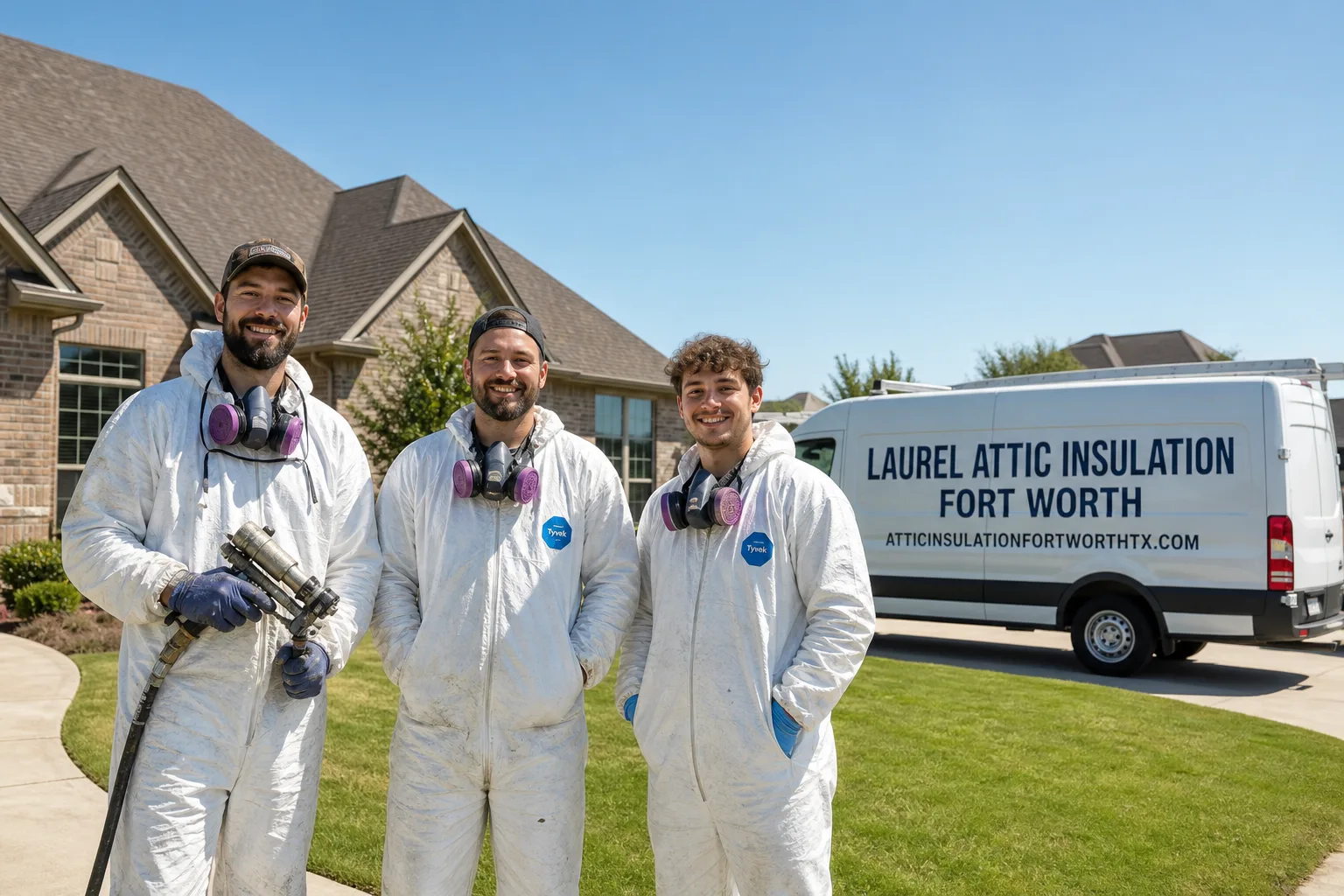
Fast, Reliable Insulation Removal Across Haltom City
Insulation removal in Haltom City usually costs between $1.10 and $2.60 per square foot depending on access, material type, and whether the job includes a crawl space or just the attic. Most whole-attic removals we handle in Haltom City run $850 to $2,400 for a 1,200 to 1,800 square foot home, and we can typically start within one to three days. If you’re dealing with hail-battered attic insulation, rodent contamination, or a botched prior job that’s blocking your soffit vents, our crew will get it out and prepped for new material fast. Call (817) 730-5474 and we’ll give you a written price before any work begins.
Why Laurel Attic Insulation Fort Worth Is Haltom City’s Preferred Insulation Removal Company
We know Haltom City’s housing stock better than a generic DFW crew that rolls through once. Most of the homes here north of NE 28th Street and around the Haltom Road corridor were built between 1955 and 1975, and nearly all of them share two problems: original batt insulation that’s either flattened or waterlogged, and crawl space cavities that never got insulated at all. When Chase Whitaker dispatches a Laurel crew to Haltom City, the technician already knows whether they’re likely walking into a pier-and-beam ranch or a slab-on-grade construction on the east side near Birdville ISD area. That matters because removal strategy changes with the foundation type.
Every job carries the Relay Visibility Guarantee: you get a live arrival time, before-and-after photos, and a written price before the first bag of old insulation leaves your attic. Our 365-Day Done Right Promise covers the workmanship for a full year. If something isn’t right, we come back and fix it. No charge, no argument. If a repair fails within that year, the second visit is free too. Haltom City homeowners tell us the photo documentation is the part they didn’t know they needed until they saw it. You shouldn’t have to climb a ladder to confirm your attic was actually cleaned out. We put the proof in your hand.
We also picked up on how hail claims shape this market. Haltom City sits in a hail corridor, and a lot of our removal calls start the same way: a roof replacement is approved, insulation gets soaked during the tear-off or because shingles were missing before the adjuster showed up, and then the homeowner notices a musty smell upstairs. We’ve handled enough of these post-storm cleanups in Haltom City that we know how to sequence the work with your roofer so you don’t end up with new decking over moldy insulation.
Crawl Space Cleaning in Haltom City
Crawl Space Cleaning in Haltom City is a specific need tied directly to the pier-and-beam foundations that dominate the older neighborhoods off Haltom Road, Broadway Avenue, and near the city’s original downtown core. When old insulation is disturbed or removed from above, debris, dust, and sometimes pest droppings fall through the floor framing into the crawl space below. Leaving that material in place means you’re inviting rodents to nest and moisture to wick into the floor joists. Our crew vacuums out the cavity, removes damaged vapor barrier, sanitizes the open bays, and preps the space for new insulation if you’re going that route. Most crawl space cleanings in Haltom City run $600 to $1,400 depending on square footage and how much debris is down there.
Pier-and-Beam Floor Cavity Prep
Haltom City’s original mid-century homes often have floor cavities that were never insulated. When we remove attic insulation and the homeowner wants to address the whole thermal envelope, we open the crawl space access and clean out the bays before anything new goes in. That includes removing old newspaper, pest nests, and any fiberglass that fell through during the attic work. A clean cavity means new insulation actually reaches its rated R-value instead of being undermined by moisture and debris.
Pest and Moisture Mitigation
Uninsulated floor cavities in Haltom City are a known entry point for rodents and the humidity they bring in with them. During crawl space cleaning, our techs check for droppings, chew marks on duct boots, and damp spots along the sill plate. If we find a pest entry point, we’ll flag it so you can seal it before new insulation goes in. We’re not an exterminator, but we won’t install fresh material over a live rodent highway either.
Attic Insulation Replacement in Haltom City
Attic Insulation Replacement in Haltom City often starts with a removal that reveals why the old material failed. In a 1960s ranch near Haltom Road, we’ll frequently find R-19 batts that have compacted to less than half their original thickness. Add North Texas hail storms that tear shingles, and you get soaked fiberglass that dries into a crusty mat with zero thermal value. Our crew removes the ruined material down to the drywall or decking, checks for mold, and installs fresh insulation matched to the attic’s ventilation profile. Attic insulation replacement with removal typically runs $1,400 to $3,100 in Haltom City for a standard single-story home, depending on square footage and the R-value you’re targeting.
Post-Hail Replacement Sequencing
When a Haltom City roof takes hail damage, the attic insulation is at the mercy of the weather until the roofers get the decking sealed. We coordinate so that insulation removal and replacement happens either immediately after the roof is dried in, or we schedule a tarp-and-remove sequence if rain is forecast. The goal is to never trap moisture between new decking and old batts. A lot of mold problems in Haltom City attics are created by that exact sequencing mistake.
R-38 and R-44 Retrofits for Older Homes
Many Haltom City homes built in the 1960s and 70s top out at R-19, which isn’t close to what today’s North Texas summers demand. After we remove the old material, we typically recommend upgrading to R-38 or R-44 batts or blown-in fiberglass. The attic framing in these older homes usually accommodates the upgrade without modification. The improvement in summer cooling bills, especially with Haltom City’s radiant heat gain, is measurable within the first billing cycle for most customers.
Trusted Brands We Service in Haltom City
We remove all types of insulation, but we’ve seen enough failed products in Haltom City homes to know what performs. Our replacement recommendations lean on brands that hold up to North Texas heat and storm-driven humidity. Rockwool batts are a frequent recommendation for Haltom City pier-and-beam homes because the material resists moisture and doesn’t support mold growth in humid floor cavities. For attics, we work heavily with CertainTeed blown-in fiberglass, and for air sealing plus insulation in old Haltom City homes, Icynene open-cell spray foam is a strong performer. We stock common replacement material locally for faster turnaround in Haltom City, so you’re not waiting a week for a special order while your attic sits exposed.
Common Insulation Removal Problems We See in Haltom City Homes
- Hail-soaked attics with a mold layer beneath. Storm-driven rain soaks old attic insulation, but often the visible batts look dry on top while the bottom layer against the drywall is wet and growing mold. In Haltom City’s pier-and-beam homes, that moisture also travels downward into the floor cavities, so a surface-only replacement misses half the problem.
- Clogged soffit vents from a botched prior removal. Leftover cellulose from a sloppy job blocks the soffit vents, trapping humidity in the attic. In the rare North Texas freeze, that trapped moisture condenses and can cause ice dams along the eaves. A proper removal in Haltom City includes clearing every vent opening and confirming airflow before new insulation goes in.
- Debris left in crawl spaces after attic work. If a previous crew removed insulation from the attic without sealing the access points, debris and fiberglass particles fall through into the crawl space. Hail-damaged roof debris and pest nests accumulate there, and any new insulation installed above will start degrading within months because the moisture and pest pressure from below hasn’t been addressed.
- Compressed batts over pier-and-beam floor cavities. In Haltom City’s older homes, unducted floor cavities were sometimes stuffed with fiberglass that was never supported. Over 40 or 50 years, that material sags and compresses, losing most of its R-value. Removing it and replacing it with rigid board or properly supported batts changes how the home retains heat during winter cold snaps and hail-season power outages.
Pricing for Insulation Removal in Haltom City, TX
You should know what you’re getting into before you commit. A typical attic insulation removal in Haltom City runs $850 to $1,700 for a standard 1,000 to 1,400 square foot attic with standard access. Larger homes or attics with difficult access, like a low-pitch roof or a closet hatch, run $1,700 to $2,400. Crawl space cleaning and insulation removal under a pier-and-beam home typically adds $600 to $1,400 depending on the debris load and how much of the cavity needs to be cleared. If we’re removing waterlogged or mold-contaminated material, that’s included in the removal cost. We write the price down before we start, and it doesn’t change unless you add scope after seeing what’s in the cavity. Call (817) 730-5474 for an exact quote. The estimate is free.
We Also Serve Cities Near Haltom City
Our crews cover the whole northeast Tarrant County corridor. If you’re in Fort Worth, Bedford, Colleyville, or Euless, we can typically reach you the same week. Each of those areas has its own housing quirks, but the same Insulation Removal standards apply: written pricing, photo proof, and a 365-day workmanship guarantee. You can learn more about our work across the region on our Haltom City service page.
Serving Haltom City, TX - Our Local Coverage Area
We’re based in the Haltom City area and know this community well. Use the map below to see our service coverage - if you’re nearby, we can almost certainly help.
FAQs About Insulation Removal in Haltom City
Haltom City’s hail risk means we inspect the roofline and decking for hidden water channels before we start pulling insulation, because storm damage often routes water into areas that look dry from the attic floor. After a hail event, we sequence removal so that the attic is fully dried before new insulation is installed, and we document any mold or water staining in the photos we send you. Call (817) 730-5474 after a storm and we’ll get a crew out quickly.
For insulation removal and replacement, Haltom City typically does not require a standalone building permit unless the work is part of a broader renovation that touches structure, electrical, or HVAC modifications. What the city does enforce is that the finished insulation meets current energy code minimums, and a licensed contractor should confirm the final R-value matches what was specified. We handle documentation for you.
Yes, and in old Haltom City we do this regularly. Pier-and-beam floor cavities collect debris, old newspaper stuffing, and pest nests, and removing that material by hand is the only way to prepare the space for new insulation. Our crew accesses the crawl space, vacuums out the bays, treats for odor, and confirms the vapor barrier condition before anything new goes in.
The first sign is usually a persistent musty odor upstairs or visible water staining on the attic side of the ceiling drywall, because hail damage lets water soak the batts from above. Once fiberglass or cellulose is saturated, you can’t just blow new insulation over it: the wet mass compresses, molds, and keeps wicking moisture into the framing. If you smell it or see staining, call (817) 730-5474 and we’ll tell you if removal is warranted.
Old insulation in Haltom City’s 1960s homes is often too thin and poorly air-sealed to stop wind-driven air from pushing through the attic floor and into the living space during a storm. You feel it as drafts near light fixtures and along interior walls when the wind gusts. Removing the old material and air-sealing the attic floor before installing new insulation stops that pressure-driven airflow and keeps conditioned air inside, even in the wind corridor north of Fort Worth.
Written by Chase Whitaker, Owner at Laurel Attic Insulation Fort Worth.